 Skip to content

Potato Beetles, Squash Borers and Hornworms, Oh My!
When summer is in full swing, the triple-threat problem of Colorado potato beetles, squash vine borers, and tomato hornworms can drive a gardener mad. But before you give up, check out our tips on how to combat these pests and reduce their impact on your garden.
Colorado Potato Beetles
These brightly colored insects are easily recognizable as larvae and as adults, and their damage is easy to spot. They can be a terrible pest of your potato plants, as well as others in the nightshade family, including tomatoes, eggplants, and peppers.
Adults overwinter in the soil, emerging in late spring to early summer. After mating, females lay eggs in clusters of 20-30 yellow eggs on the undersides of potato leaves. One female can lay more than 300 eggs. After hatching, the larvae (the most destructive life stage) begin to feed, eating the leaves and defoliating the plant.
Potato beetles are a serious pest on your potatoes, but can also affect other plants, and have become resistant to many insecticides.
Identifying potato beetle damage (and the insect)
You'll notice Colorado potato beetle damage as munched leaves on your potato plants. While the adults also feed on leaves, it's the larvae that do most of the damage in our gardens, and the fourth instar or stage is the largest and eats the most.
Adult Colorado potato beetles are brightly colored. Their heads are orange with black speckles, and the wing covers on their backs are striped in yellow and black. Larvae are humpbacked, dirty orange colored, with a few black spots, and can be found clinging all over your potato plants. If you see a skeletonized potato leaf with an icky looking grub thing on it, that’s probably a Colorado potato beetle larva.
Controlling Colorado Potato Beetles
As a kid, I was sent many mornings from midsummer onward to the garden with an old yogurt container to pick off potato beetles. While it sounds tedious (it was torture to a 13-year-old), a quick, daily round through the garden to nab adult beetles and collect the larvae takes only a couple of minutes for the size of potato patch most of us grow. Hand-picking them is effective, and of course, chemical-free. Potatoes can tolerate some leaf feeding damage, so hand-picking is often sufficient to preserve your crop.
Drop larvae into an old container filled partway with soapy water, collect them for later squishing, spread them for your chickens (they love potato beetle larvae), or toss them out into the driveway for the birds to eat. Look under the leaves, along the stems, and focus on snagging the large ones first. While damaging, finding all the little ones can absorb your time and aren't a high priority. You can grab them in a day or two when they're bigger.
Squashed potato beetle larvae give off an orange-yellow staining liquid, so don't wear your nice clothes.
Here are a few more actions to try:
-
Use floating row covers to prevent adults from laying eggs.
-
Skip growing potatoes for a year to deny overwintering potato beetles a food source when they emerge.
-
Plant early-maturing varieties, which will be mostly done by the time the potato beetles become a problem. Look for varieties with maturities of 80 days or less.
-
Clean up weeds that can harbor the Colorado potato beetle when they cannot get to potatoes, including nightshade and ground cherry.
-
Smash the eggs when found on the underside of leaves. It's much more time efficient to smush thirty eggs with a swipe of your thumb than to try to pick off thirty larvae.
Squash Vine Borers
Squash vine borers (sometimes referred to as SVB) are the larval portion of a small, colorful black and orange moth. The larvae feed on the vines of summer and winter squash, and pumpkins, and can quickly turn your hopes of pumpkin pie, roasted squash, and zucchini bread into wilted, dead vines.
Adults emerge in midsummer after overwintering in cocoons in the soil. They lay eggs at the base of plants, and after hatching, the larvae burrow into the stems to begin feeding, hence the name. The larvae bore a hole into the thick lower stem and begin feeding, destroying the vascular structures that transport water and nutrients to the rest of the plant. After feeding for several weeks, the larvae return to the soil, where they pupate and wait for next year. Many locations experience only one generation per year, but warmer climates may have two.
Identifying squash vine borer damage (and the insect)
Squash vine borer damage initially looks like slight wilting of the leaves, especially on hot days. As the damage progresses, the plants will wilt and not recover. Small holes with orange or green frass (looks like wet sawdust) can be seen at the bottom of the vines or main stems. The base of the vine may become soft and rotted.
The larvae appear unremarkable and are small, creamy-white worms that resemble large maggots. Adults are small, brightly colored, clearwing moths that look more like a wasp than a moth. They make a loud buzzing as they fly about, and if it weren't for the problems they cause, they'd be pretty to look at.
Controlling SVB
Once they've achieved a foothold in your squash vines, SVBs are hard to control. Watch for the brightly colored moths, which begin appearing in early summer. Check out this advice from the University of Minnesota Extension on how to make a trap to catch them. Pheromone traps, which attract the male moths (so you know when they've arrived), are also available.
-
Use floating row covers for a few weeks when the adult moths are flying about. The covers must be tightly secured to the ground to prevent moths from getting under the edges. Remove the covers once the squash begins to flower, allowing pollinators access, or hand-pollinate the female flowers.
-
Slice the vine and kill the worm. If you catch it early, you may be able to make a lengthwise slit, remove the worm, and bury the slitted portion of the vine in soil where it may root. It often fails to save the plant, but it's worth a try if you catch them early. It also prevents them from overwintering in the soil to bother you again next year.
-
Plant a late crop. Squash vine borers need a big, fat vine to feed on. If your growing season is long enough, plant squashes and pumpkins in mid-July after the adults have finished laying eggs.
-
Butternut squash and others of the Cucurbita moschata species are somewhat more resistant than their hollow-stemmed counterparts.
-
Crop rotation is beneficial, but it is not usually effective in controlling SVB on the small scale of home gardens.
Tomato Hornworms
Visit any social media channels where folks talk about tomato pests, and you'll see plenty of complaints about hornworms. The trouble stems from two factors: the defoliating damage they cause, and the speed at which they do it.
Tomato hornworms love tomato plants, but can also bother other plants in the tomato family, including peppers, eggplants, and potatoes. They are the larval (caterpillar) stage of the tomato hornworm moth, and are voracious eaters. Fortunately, they are controllable.
Identifying the damage (and the insect)
Defoliation is what these caterpillars do, and they are fast at it. Hornworms damage tomato plants by eating the leaves. They're so good at it that you'll often find tomato plant branches that look like sticks, with no tender stems or leaves left. If you have a tomato plant that is starting to look like a tree after it loses its leaves in the fall, it's likely hornworms.
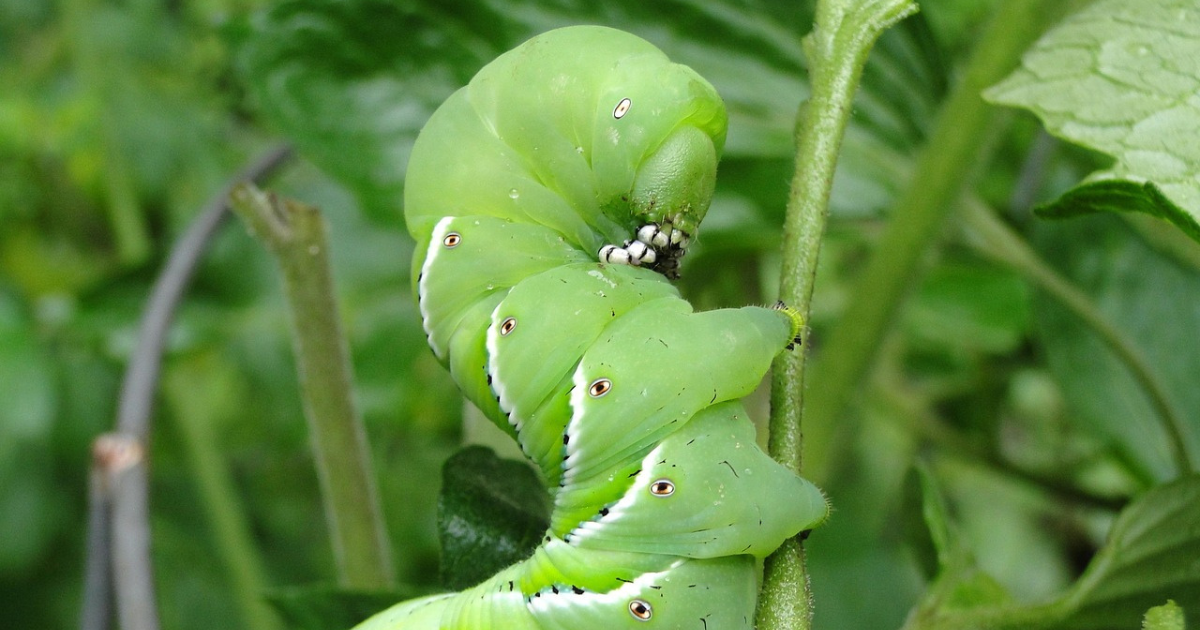
The tomato hornworm caterpillar is pretty unmistakable, if only for its size. Hornworms are green, and as they grow larger, they will develop V-shaped white markings on each side. Their name comes from the single black spike sticking out of their back end, which looks like a rhinoceros horn. While many other green caterpillars in the garden are small, these are not, and can be 3-4 inches long, and fatter than a pencil.
Controlling tomato hornworms
The key to controlling tomato hornworms is frequent walks in your garden. You've got to know the pest is there to combat it. Given the speed with which these caterpillars can destroy a mature tomato plant, a weekly garden tour won't cut it. Get out there daily and take a look, checking for defoliation, frass (caterpillar poo) and of course, green worms hiding along the stems of your plants.
For most gardeners, simply plucking them off and killing them works well. However, many folks find plucking them off unpleasant, and squishing them even more so. As grisly as it sounds, using old scissors and simply snipping them in half works great. If you hand-pluck them, you can drop them in a coffee can with soapy water, collect them for your chickens, or simply toss them as far as you can into the yard for the birds to feast on.
To turn your worm hunt into a high-tech adventure, try a UV flashlight. Head out in the dark with a UV light and any tomato hornworms will glow, making them easy to find.